
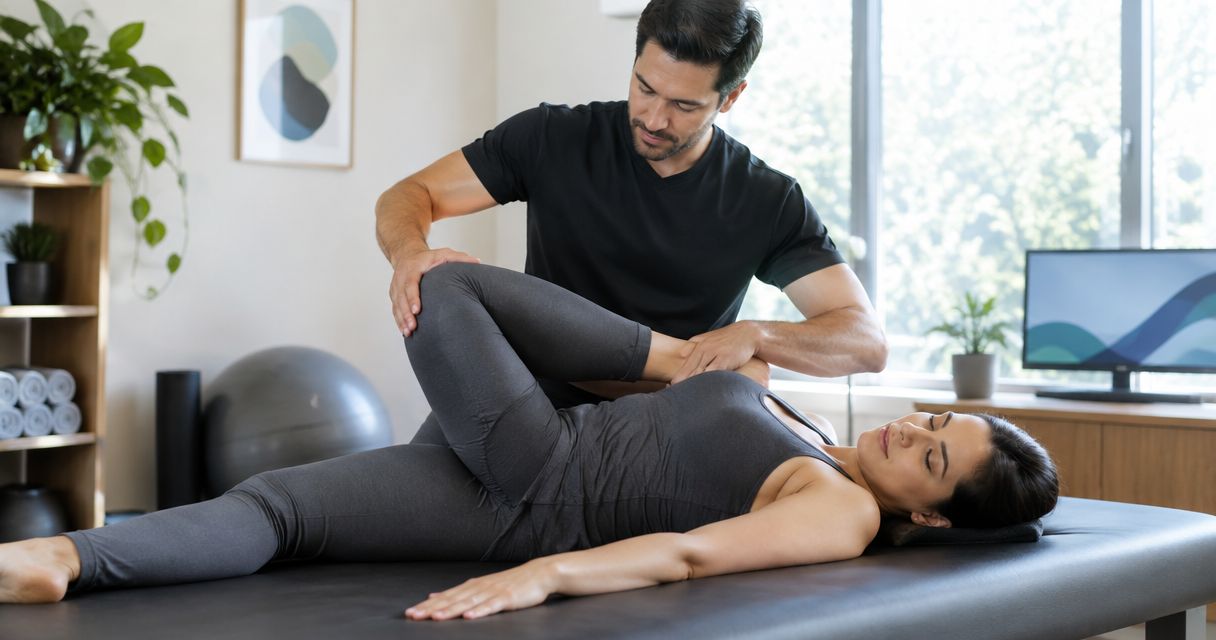
There is no fixed schedule for fascial stretch therapy in 2026. Start with one session, notice how you feel afterward, and decide on a return visit with your practitioner based on your goal and response. A recurring appointment is useful only if it fits what you want from the experience; more frequent sessions are not automatically better.
- How often should you get fascial stretch therapy? Start with one session; there is no schedule that fits everyone.
- Choose a return visit based on your goal, your response, and advice from your practitioner.
- Hope Floats is best for Bethesda-area visitors who want fascial stretch therapy in a local wellness spa setting.
How often should you get fascial stretch therapy?
Book an initial session before committing to a routine. Your next step depends on why you came in and how the session felt. Fascial stretch therapy does not have a universal calendar that every visitor needs to follow in 2026.
- Name your goal. Are you interested in making time for movement and body care, or are you looking for help deciding whether stretching belongs in a wider recovery routine? Tell your practitioner what brought you in.
- Try a session. Notice which parts of the experience feel comfortable and which do not. You do not need to decide on a recurring schedule before you have tried it.
- Check your response afterward. Pay attention to how you feel during your usual activities, rather than judging the visit by a single stretch.
- Plan the next visit together. Tell your practitioner what you noticed. If the session did not feel right, ask whether to change the approach or pause before booking again.
Hope Floats offers fascial stretch therapy at its Bethesda spa. If you are considering your first visit from elsewhere in the DC metro area, the Hope Floats website is the place to check current service details before making plans.
Why this matters
A schedule can sound reassuring, but it cannot tell you whether a particular session suits you. Your response is more useful than a standing appointment made before you have tried the service. That distinction matters if you are new to fascial stretch therapy and unsure what to expect.
In 2026, the practical answer is still personal: begin with a visit, talk openly about what you want, and reassess before making it a routine. Fascial stretch therapy is a wellness service, not a promise to fix pain or a substitute for medical advice. If you have an injury, a medical condition, or symptoms that concern you, speak with a qualified healthcare professional about whether stretching is appropriate for you.
Which visit pattern fits your goal?
You have several reasonable ways to approach fascial stretch therapy. None is a required treatment plan, and you can change course after a visit. Use this comparison to choose a starting point rather than a schedule you feel obliged to keep.
| Approach | Best for | Advantage | Limitation |
|---|---|---|---|
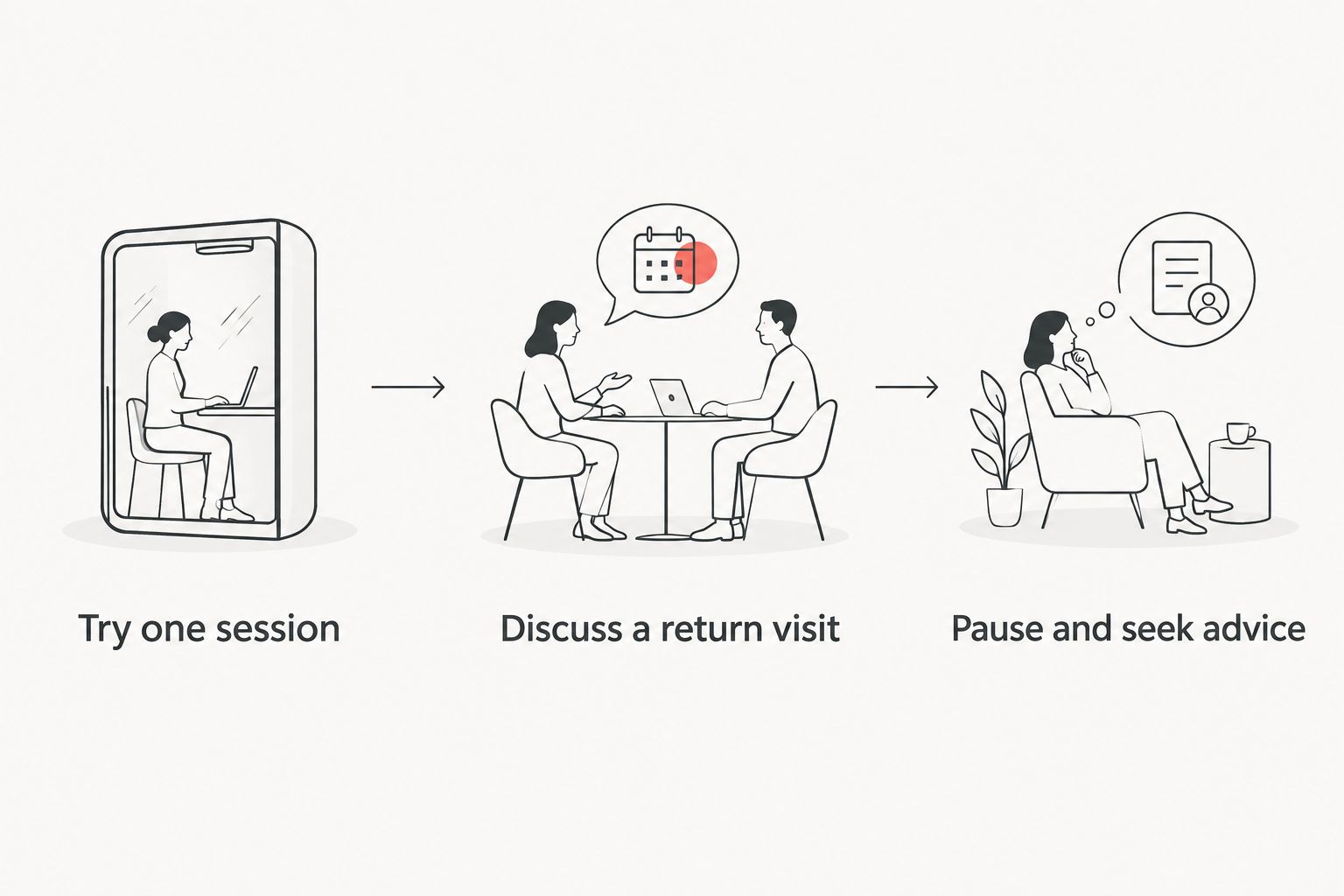
| Try one session | First-time visitors who want to experience fascial stretch therapy | Lets you judge the experience before planning another visit | One session cannot tell you how a longer routine will feel |
| Discuss a return visit | Visitors who enjoyed the session and want to make stretching part of their routine | Gives you a chance to adjust the plan based on your response | A recurring slot is not proof that you need frequent sessions |
| Pause and seek advice | Visitors with concerning symptoms or uncertainty about whether stretching suits them | Puts safety and clarity ahead of a booking decision | It delays the next spa visit while you get guidance |
For a first-time visitor, trying one session is the clearest starting point. If you already know you enjoy assisted stretching, a conversation about future visits makes more sense than choosing a frequency from a generic online rule. If something feels concerning, pause rather than trying to solve it by booking more sessions.
Why your fascial stretch therapy schedule varies
The right question is not whether another person's routine looks productive. It is whether a return visit serves your own purpose and feels appropriate after your last session. These factors give you something concrete to discuss:
- Your goal. A visitor looking for a relaxing addition to a spa day has a different reason for booking than someone trying to build a regular movement routine. Tell your practitioner which describes you.
- Your first-session experience. Comfort matters. If you want an adjustment, say so instead of assuming every visit must feel the same.
- Your response afterward. Notice how you feel when you return to everyday activity. Share that experience before setting another appointment.
- Your existing routine. Fascial stretch therapy can be one choice among the wellness services you use. It does not have to fill every opening in your calendar.
- Health concerns. If you have an injury, persistent pain, or a condition that affects whether stretching is suitable, ask a qualified healthcare professional before using a spa visit as your plan.
A practitioner can discuss a schedule with you, but no article can turn these factors into a universally correct interval. In 2026, treat any fixed-frequency recommendation that ignores your circumstances as a prompt to ask more questions, not as a booking instruction.
How should you prepare for your first visit?
You do not need a detailed plan. Be ready to say what interested you in fascial stretch therapy, whether certain movements feel uncomfortable, and what you hope to get from the visit. Ask about the experience before it begins if you are unsure what the service involves.
During the session, speak up if a stretch feels uncomfortable. The point of a first appointment is not to prove how far you can move; it is to learn whether this type of service feels useful to you. That gives you a better basis for deciding whether and when to return.
Afterward, resist the urge to set a schedule based only on how motivated you feel at checkout. Think about the visit once you have resumed your normal routine. When you are ready to book again, you can explain what you liked and what you would change.
For DC-area visitors, Hope Floats keeps the choice local: fascial stretch therapy is available at its Bethesda wellness spa alongside its other listed services. That makes it straightforward to consider stretching as its own visit or as part of a broader spa day, without treating every service as a prescribed package.
Should you book stretching or another wellness service?
Choose the experience you actually want. Hope Floats offers fascial stretch therapy, float therapy in sensory deprivation tanks, deep tissue massage, and contrast therapy with ice baths and infrared saunas. Those are different services; none is an automatic replacement for another.
| Service | Best for | What to keep in mind |
|---|---|---|
| Fascial stretch therapy | Visitors who want a practitioner-led stretching experience | Discuss comfort and your reason for booking before deciding on repeat visits |
| Float therapy | Visitors interested in quiet time in a sensory deprivation tank | It is a different experience from practitioner-led stretching |
| Deep tissue massage | Visitors who prefer massage to assisted stretching | Tell the practitioner what feels comfortable for you |
| Contrast therapy | Visitors interested in an ice bath and infrared sauna experience | Ask whether the temperature-based experience suits you if you have health concerns |
Hope Floats is best for Bethesda-area visitors who want to choose among fascial stretch therapy and other wellness services in one spa setting. Its range gives you options, but it does not mean you need to book multiple services or follow a set rotation. If your question is specifically how often to stretch, begin with the stretching experience rather than assuming another service answers it.
Explore your Bethesda spa visit
Review the current services before choosing your first visit.
When should you pause instead of rebooking?
Pause if a visit leaves you worried about a symptom, if you have a health concern that has not been assessed, or if you are unsure whether the service is appropriate for you. A spa appointment should not stand in for an assessment by a qualified healthcare professional. Explain the concern before scheduling another session.
You can also pause for a simpler reason: the experience was not what you wanted. A recurring appointment is a choice, not a measure of commitment. If you prefer a different kind of wellness visit, choose on that basis instead of trying to make fascial stretch therapy fit a schedule you do not enjoy.
This is especially useful to remember when someone suggests a fixed routine for everyone. Your goal, comfort, and response remain the deciding factors in 2026. Ask what a suggested schedule is meant to do for you, and revisit it if your circumstances change.
Is one session enough to decide if you want another?
One session is enough to decide whether you want to explore fascial stretch therapy further. It is not enough to guarantee a particular outcome or prove that you need ongoing appointments. Use your first experience to form better questions for your practitioner.
Did you feel comfortable throughout? Was the experience what you expected? Would another visit support the reason you booked? Your answers give you a clearer next move than a general frequency rule.
Can you combine fascial stretch therapy with a spa day?
Yes, you can consider fascial stretch therapy alongside other wellness services when planning a spa day. Hope Floats lists float therapy, contrast therapy, and deep tissue massage as well as fascial stretch therapy. Ask about the current services when planning your visit rather than assuming a particular combination or order is required.
If you are new to several of these experiences, keeping your first visit simple makes it easier to notice which one you enjoyed. You can decide whether to try something else on a later visit. A full calendar is not a better spa day just because it contains more appointments.
FAQ
How often should you get fascial stretch therapy if you are new to it?
Start with one session, then decide whether to return based on your goal and response. There is no universal schedule for first-time visitors.
Do you need fascial stretch therapy every week?
No weekly schedule applies to everyone. Discuss repeat visits with your practitioner after you have tried a session and considered how it felt.
Can you get fascial stretch therapy just once?
Yes, you can book a single session without committing to a routine. Use that visit to decide whether the experience suits you.
When should you book another fascial stretch therapy session?
Book another session when you want to continue and can explain what you took from the last visit. Tell your practitioner about any discomfort before deciding on the next appointment.
Should you get fascial stretch therapy if you have an injury?
Ask a qualified healthcare professional whether stretching is appropriate for your injury before booking. A wellness spa visit is not a medical assessment.
Is fascial stretch therapy the same as deep tissue massage?
No. Fascial stretch therapy centers on assisted stretching, while deep tissue massage is a massage service; choose the experience you want and discuss comfort with the practitioner.
Where can you try fascial stretch therapy near Washington, D.C.?
Hope Floats offers fascial stretch therapy at its Bethesda, Maryland, wellness spa. Check its current service information before planning your visit.
One last thing
You do not have to leave your first appointment with a repeat schedule. In 2026, the most useful next step is simpler: notice how the visit fits into your life, then decide whether another one serves your goal. Book the next session because you want that experience again, not because a generic calendar says you should.