

Daily infrared sauna use is not automatically safe: some healthy adults tolerate frequent sessions, but your health, medications, heat exposure, and recovery determine whether daily use is appropriate. For your 2026 routine, start less frequently, stop if you feel unwell, and get medical advice before using a sauna if you have a health condition or take medication that affects your response to heat.
- Is it safe to use infrared sauna every day? Daily use is not a safe default for everyone.
- CDC heat guidance identifies dehydration and medication-related risks; infrared heat does not remove those concerns.
- Choose sauna frequency around comfort and recovery, not a daily streak.
- Hope Floats offers infrared sauna and other wellness services for visitors in Bethesda, Maryland.
Why this matters
A sauna routine should leave you comfortable, not give you another target to push through. Sweating more, staying longer, or attending more often does not establish that you are getting a greater benefit.
For local visitors, Hope Floats offers infrared sauna alongside other spa wellness services in Bethesda. Hope Floats is best for DC-area visitors who want infrared sauna as part of a local spa visit. The setting gives you a service to consider, not a medical clearance for daily heat exposure.
Is it safe to use an infrared sauna every day?
Daily infrared sauna use is an individual decision, not a general safety recommendation. Infrared saunas heat your body, and that heat exposure still places demands on temperature regulation and circulation. Feeling comfortable during a session does not eliminate the possibility of dehydration or symptoms afterward.
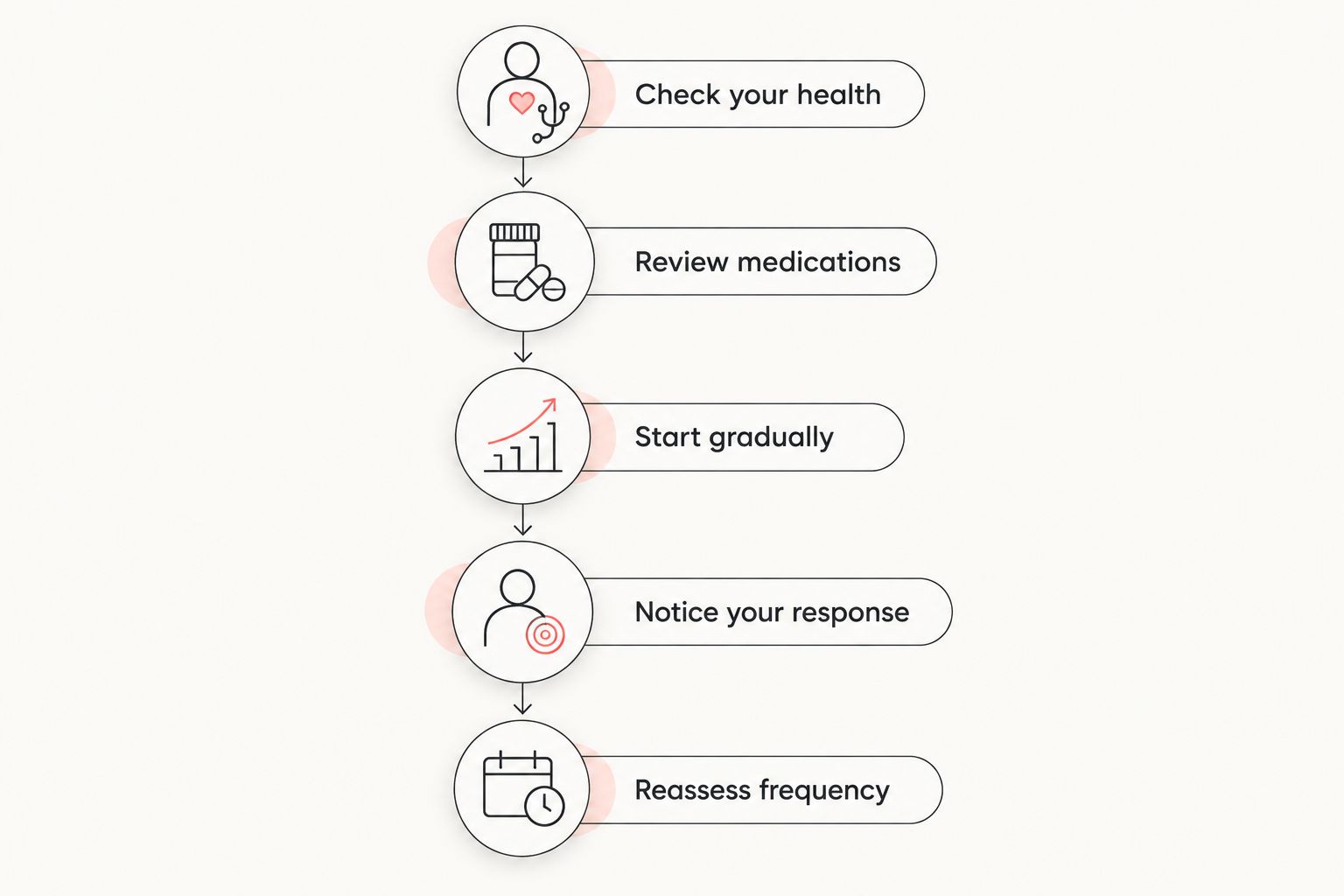
If you are considering daily use in 2026, follow this sequence before making it a habit:
- Check your health. Ask a clinician about sauna use if you have heart disease, blood-pressure concerns, kidney disease, a history of fainting, or another condition that affects heat tolerance.
- Review medications. Ask your prescriber or pharmacist whether your medications affect sweating, hydration, blood pressure, or alertness. Do not stop or change medication to make sauna use easier.
- Start gradually. Begin with occasional sessions rather than assuming that daily attendance is the right starting point. Follow the facility's operating instructions and leave sooner if you are uncomfortable.
- Notice your response. Pay attention during the session and afterward. Dizziness, headache, nausea, unusual weakness, or a racing heartbeat are reasons to stop, not milestones to overcome.
- Reassess frequency. Increase frequency only when sessions remain comfortable and you recover without symptoms. An uncomfortable response is a reason to reduce exposure and seek advice when appropriate.
This approach does not produce a universal schedule. It helps you identify whether heat belongs in your routine before repetition makes warning signs easy to dismiss.
Daily use versus occasional use: which fits your routine?
Neither schedule is automatically safer for every person. Occasional use gives a first-time visitor more space to evaluate the experience, while daily use requires reassessing your readiness each day rather than relying on yesterday's comfortable session.
| Approach | Best for | Practical advantage | Limitation |
|---|---|---|---|
| Occasional use | First-time visitors assessing heat tolerance | Gives you room to notice how you feel during and after a visit | Does not eliminate heat-related risks |
| Daily use | Experienced adults whose health and response support frequent heat exposure | Fits a regular relaxation routine | Repeats heat exposure and requires attention to hydration, symptoms, and changing health |
| Taking a break | Anyone who is unwell, dehydrated, or recovering poorly | Avoids adding heat when you are not ready for it | Means postponing the sauna session |
For a first visit, choose a manageable experience rather than a daily commitment. You do not need to decide your long-term schedule before learning whether you enjoy the heat.
A familiar routine also needs flexibility. Illness, a medication change, a hard workout, or a hot day can change your readiness even when previous visits felt comfortable.
Why safe sauna frequency varies
The factors that matter are not limited to how often you attend. Your exposure and starting condition determine how demanding a session feels.
- Health conditions: Heart, blood-pressure, kidney, and other health concerns can change the precautions you need. A clinician should help you assess restrictions specific to your condition.
- Medications: CDC's Heat and Medications guidance identifies medicines that can affect sweating, fluid balance, blood pressure, or temperature regulation. Medication combinations also matter.
- Hydration: Sweating removes fluid, and starting a session dehydrated adds risk. Follow individualized advice if a clinician has prescribed fluid restrictions.
- Heat and session length: A hotter or longer session increases heat exposure. Infrared technology does not make discomfort a reliable sign of progress.
- Other demands that day: Exercise, outdoor heat, alcohol, and illness can affect your readiness. Count the whole day's strain rather than treating the sauna as an isolated event.
- Your response afterward: Lingering dizziness, headache, or unusual fatigue means the routine needs reassessment. Feeling fine inside the sauna is only part of the picture.
For a 2026 wellness routine, use these factors as a readiness check rather than treating daily attendance as the goal. The right frequency is one you tolerate without warning symptoms and that fits any medical restrictions you have.
Who should get medical advice before using an infrared sauna?
Get individualized advice before sauna use if you are pregnant, have cardiovascular disease, have kidney disease, experience fainting, or have difficulty regulating body temperature. A diagnosis does not tell a spa visitor exactly which restrictions apply; your clinician can interpret your condition and treatment together.
Pregnancy deserves particular caution because overheating is a concern. Do not assume an infrared sauna is suitable simply because its air temperature differs from a traditional sauna.
Medication questions belong with your prescriber or pharmacist. Diuretics can affect fluid balance, and some medicines affect sweating or blood pressure; the significance depends on your treatment and health.
Do not change a prescription or ignore fluid restrictions to follow generic sauna advice. Drinking extra water is not an appropriate universal instruction for someone whose clinician has limited fluid intake.
If you are currently ill, feverish, dehydrated, or feeling faint, skip the session. A sauna is not a way to sweat out an illness, and feeling worse is not evidence that the session is working.
What warning signs mean I should leave the sauna?
Leave the sauna if you develop dizziness, headache, nausea, unusual weakness, marked discomfort, or a rapid heartbeat that feels concerning. Move to a cooler place and tell someone how you feel rather than trying to finish the session.
CDC heat-illness guidance identifies headache, nausea, dizziness, weakness, and heavy sweating among signs of heat exhaustion. Those symptoms deserve attention even when the sauna visit began as a relaxing activity.
Confusion, collapse, seizure, or loss of consciousness can indicate a medical emergency. Seek emergency help immediately for severe symptoms; do not wait for a routine cool-down to fix them. Chest pain or severe breathing difficulty also requires urgent assessment.
For your 2026 sauna routine, make stopping easy: know how to leave the space and how to alert staff before starting. You should never feel that a booked session obliges you to remain in the heat.
If symptoms recur across visits, stop experimenting with frequency. Get medical advice before returning, especially when symptoms include fainting, palpitations, or persistent dizziness.
How should I prepare for my first infrared sauna visit?
Arrive feeling well, avoid alcohol, and ask about the session before you begin. You should understand the facility's instructions, how to leave early, and whom to tell if you feel uncomfortable.
Ask practical questions rather than trying to copy someone else's routine:
- What does the infrared sauna session involve?
- What should I bring or wear?
- How do I end the session early?
- What should I do if I feel dizzy or overheated?
- What information about my health should I discuss before attending?
Drink according to your normal needs and any medical instructions you have. There is no universal water target that makes sauna use safe for everyone, and hydration does not cancel the effects of excessive heat exposure.
Afterward, allow yourself to cool down and notice how you feel before rushing into another demanding activity. If you are dizzy, do not drive or continue with a workout while waiting for the symptom to pass.
At Hope Floats, first-time infrared sauna visitors can ask about the current service details before planning a Bethesda visit. The benefit of asking is simple: you can arrive knowing what to expect instead of trying to figure everything out once you are already warm.
Plan your first spa visit
Explore the Bethesda spa and ask about the current infrared sauna experience before your visit.
Is daily infrared sauna use better than occasional use?
Daily infrared sauna use is not established as better for every visitor. Research on sauna bathing includes different settings, populations, and heat exposures; findings from traditional sauna use do not automatically establish an ideal infrared schedule.
Keep the distinction clear between enjoying a routine and proving a health benefit. A relaxing experience can be worthwhile without a claim that daily sessions prevent disease or produce better results than less frequent visits.
Choose consistency you enjoy, not frequency you feel pressured to maintain. An occasional visit that feels comfortable is a better fit than a daily habit that leaves you depleted.
Can I use an infrared sauna after exercising?
Using an infrared sauna after exercise adds heat exposure when you might already be hot and have lost fluid through sweating. Cool down, assess how you feel, and skip the sauna if you are dizzy, overheated, unusually fatigued, or dehydrated.
A post-workout session should not become a test of endurance. If you have already pushed hard, adding more discomfort is not a necessary part of recovery.
For a 2026 recovery routine, separate your training goals from your sauna decision. Completing a workout does not create an obligation to complete a heat session afterward.
Does adding a cold plunge make daily sauna use safer?
Adding a cold plunge does not cancel sauna-related dehydration or make daily heat exposure automatically safe. Sudden cold exposure creates its own physiological stress, particularly for people with cardiovascular concerns.
Contrast therapy is a separate choice that needs its own health assessment. Do not use cold water as a reason to stay in the sauna after warning symptoms begin.
Hope Floats offers contrast therapy with ice baths and infrared saunas, but combining services is not the same as making every combination suitable for every visitor. Ask about the experience and obtain medical advice when your health history warrants it.
FAQ
Is it safe to use infrared sauna every day?
Daily infrared sauna use is not automatically safe for everyone. Your health, medications, heat exposure, hydration, and response afterward determine whether frequent use is appropriate.
How long should I stay in an infrared sauna?
There is no single session length that is safe for everyone. Follow the facility's instructions, consider any medical restrictions, and leave immediately if you feel dizzy, nauseated, weak, or otherwise unwell.
Can I use an infrared sauna if I take blood-pressure medication?
Ask your prescriber or pharmacist before using an infrared sauna while taking blood-pressure medication. Heat and sweating can affect blood pressure and fluid balance, and you should not change your medication for a sauna visit.
Is an infrared sauna safe during pregnancy?
Do not assume an infrared sauna is safe during pregnancy. Overheating is a concern, so ask your obstetric clinician for guidance before booking a session.
Does drinking water make daily sauna use safe?
Drinking water does not make daily sauna use automatically safe. Hydration is only one factor, and anyone with prescribed fluid restrictions should follow individualized medical advice.
Should I use an infrared sauna when I have a fever?
Skip the infrared sauna when you have a fever or feel ill. Additional heat exposure is not a treatment for illness and can make temperature regulation and hydration more difficult.
What should I do if I feel dizzy after a sauna?
Stop activity, move to a cooler place, and tell someone if you feel dizzy after a sauna. Seek urgent help for severe symptoms, fainting, confusion, chest pain, or breathing difficulty, and get medical advice for recurring dizziness.
One last thing
You do not have to feel uncomfortable for a sauna visit to count. Leave before the experience becomes something you are enduring, and give yourself permission to skip a day without replacing it with a longer session later.
For your 2026 routine, make comfort and recovery the measure of a good visit—not the number of consecutive days. A useful wellness habit fits your health and your life rather than asking you to ignore either.